Zhu Xiaohu invests in three consecutive rounds, with 50 institutions lining up—this company raises hundreds of millions again.
Why is this company, founded just over two years ago, so highly sought after?
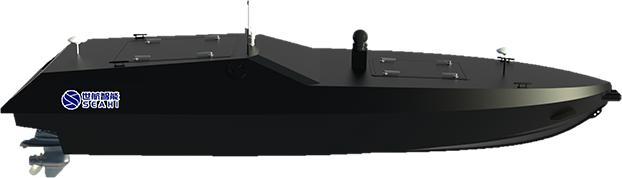
Looking back at the year's end, I noticed that the term “embodied intelligence” has transcended its narrow technical boundaries to make it onto the list of Top Ten Hot Words for 2025 released by the editorial team of Bite the Words. Today's funding announcement also features an embodied intelligence company—though not one focused on humanoid robots, which enjoy the highest public recognition. Instead, it develops marine robots capable of operating in extreme underwater environments at depths of tens of thousands of meters.
The Series A round was led by Vertex Ventures, with participation from Changshi Capital and Suzhou Venture Capital (Suzhou Fund of Funds), alongside follow-on investment from existing shareholder GSR Ventures. The Pre-A+ round was funded by Jinglue Ventures. An'yu Capital serves as the company's long-term exclusive financial advisor. This series of funding aims to accelerate product and technology iteration while advancing the mass production of embodied robots and core components.
How sought-after is this company, founded just over two years ago, in the private equity market? Consider this: Following investments in Didi and Xiaohongshu, Zhu Xiaohu has now participated in three consecutive funding rounds for the same project. During a break at last week's “History of Chinese Venture Capital” book club discussion, Zhu couldn't resist praising Seahi again. Another detail I learned: After the most recent roadshow, 50 investment institutions lined up to meet founder Chen Xiaobo.
Xangfeng Capital participated as the sole institutional investor in Yushu's Pre-A round and also led the Seahi Series A funding. Xia Zhijin, Managing Partner at Xangfeng Capital, explained that the investment decision was driven by the technology reaching a critical inflection point for commercialization. As early as 2018, he had begun monitoring underwater and marine robotics. However, the timing was premature—the technology hadn't yet matured to meet practical demands, preventing scalable commercialization. The core challenges then included limited room for controlling labor costs, suboptimal performance of underwater robots in real-world applications, insufficient operational efficiency, and an inability to operate autonomously.
After five to six years of technological accumulation, breakthroughs have been achieved in both hardware and software. Hardware iteration has accelerated significantly, while software has advanced toward smarter capabilities like seabed environment recognition, substantially boosting operational efficiency. Last year, we reassessed the entire industry, and Seahi emerged as the team we hold the highest regard for—they've achieved international leadership in certain technologies," Xia stated.
This transformation is already reflected in Seahi's commercialization capabilities. “This year's revenue has doubled compared to last year, and we expect to achieve profitability next year. By the first half of next year, we anticipate mass production of over a hundred robots, elevating our industrialization capacity to over 70% of the global marine robotics market,” revealed Chen Xiaobo.
For background information on Seahi, please refer to the article “After ‘Exiting Human-Shaped Robots in Bulk,’ Zhu Xiaohu Invested in an Underwater Robot.” Half a year later, I invited Chen Xiaobo to update us on the company's progress and also chatted with him about his personal journey:
01
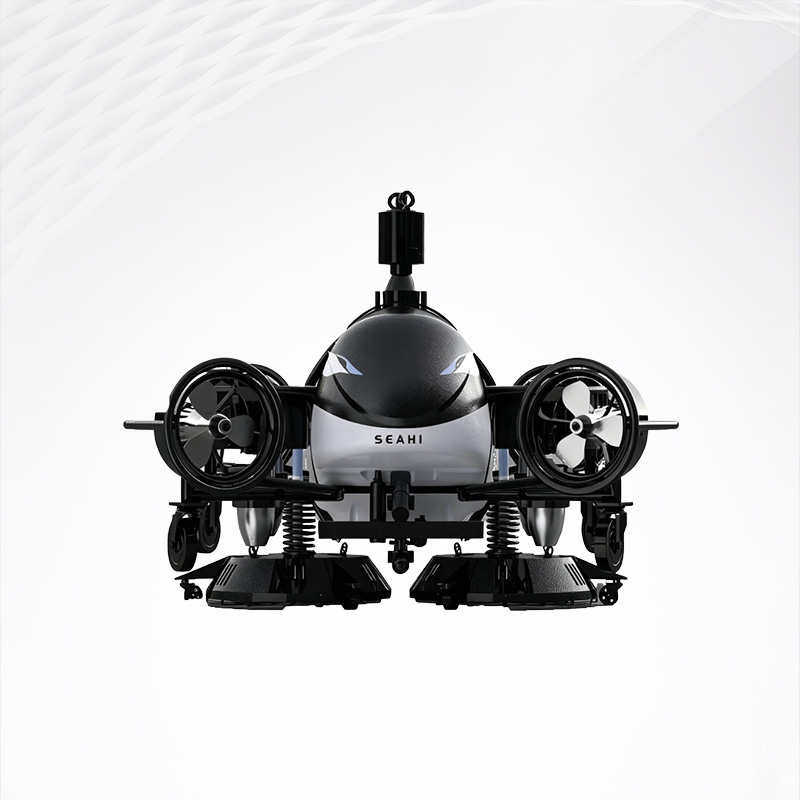
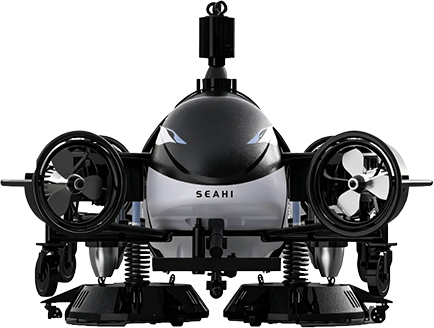
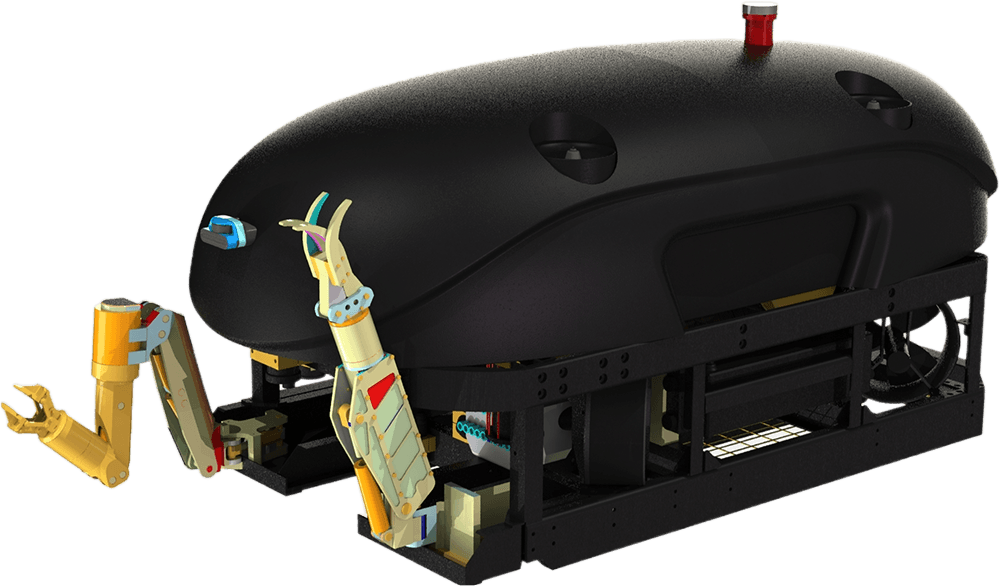
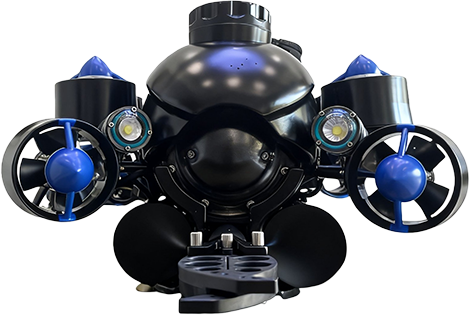
First, in terms of technological R&D, Seahi Robotics has iterated through two new versions, achieving significant enhancements in operational capabilities. As previously discussed, underwater robots face complex environments including waves, currents, swells, high salinity, high pressure, and high corrosion, making the technical challenges and barriers no less demanding than those for humanoid robots. According to Chen Xiaobo, Seahi's Orca robot is currently the world's only robot capable of operating with full freedom of movement in real ocean conditions. Compared to overseas competitors like Hullwiper, it achieves five times the operational efficiency at one-tenth the cost and one-quarter the weight and volume. While I may not be an expert on the technical intricacies, let's see how professional organizations evaluate Seahi's technological capabilities.
In August, the “Port and Shipping Universal Marine Robot and Intelligent Core Equipment” project—jointly developed by Seahi, China Merchants Shipping, Shandong Port Group, and Harbin Engineering University—received China's highest logistics technology award: the “First Prize for Scientific and Technological Progress” from the China Federation of Logistics & Purchasing.
That same month, Seahi's research achievement “AI-Driven Underwater Cleaning and Inspection Robot” was honored with the “First Prize for Scientific and Technological Achievements” from the China Association for Science and Technology.
In September, at the inaugural Embodied Intelligence Special Competition of the 14th China Innovation and Entrepreneurship Contest hosted by the Ministry of Industry and Information Technology, Seahi secured the national championship title.
In November, the Seahi Orca marine embodied robot was evaluated by a panel of experts from the International Aeronautical Federation, the Water Transport Research Institute of the Ministry of Transport, the China Navigation Institute, the China Maritime Safety Administration, the China Classification Society, the Standardization Administration of China, Dalian Maritime University, Shanghai Maritime University, the Yangtze River Navigation Bureau, the Naval Submarine Academy, and Northwestern Polytechnical University. It was certified as “internationally leading.”
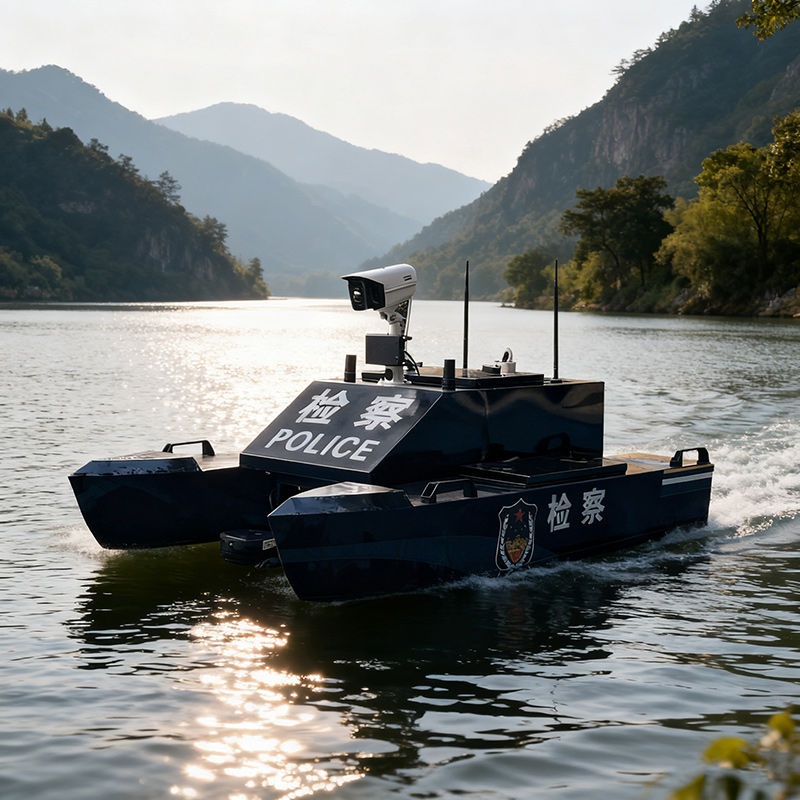
Additionally, Seahi has been recognized as a National High-Tech Enterprise, a National Standard Innovation Enterprise, and a Jiangsu Province Potential Unicorn, accumulating over 300 intellectual property certifications. During the Shanghai Import Expo, Seahi Robotics also undertook underwater security operations in the core waters of the Huangpu River, demonstrating its operational capabilities in high-sensitivity scenarios.
Extended R&D cycles remain a critical bottleneck constraining the development of the marine embodied robotics industry. Seahi's competitive edge lies in the fact that Chen Xiaobo led numerous major national projects during his academic years. The necessary “tuition fees” for R&D trial-and-error costs and technological path exploration have largely been paid, minimizing the need for excessive detours.
According to Xia Zhijin's assessment, Chen Xiaobo entered the underwater robotics field nearly two decades ago, a level of experience and seniority that is exceptionally rare in the industry.
After producing its first prototype, Seahi was able to generate revenue through practical applications. Consequently, for a considerable period, the company did not rely on external funding. It was only after preparing for scaled development that it sought further external financing.
02
While humanoid robots are still largely exploring practical applications, marine environments present genuine demand and commercial viability for robotic labor replacement.
In shallow waters ranging from 0 to 300 meters, products focus on marine infrastructure maintenance—most notably underwater vessel cleaning, an existing critical need. Ship hulls are prone to fouling by marine organisms like barnacles, which not only reduce speed but also increase fuel consumption. Conventional cleaning requires at least one annual session, with manual labor costs reaching up to ¥150,000 per cleaning. Traditional methods involve either towing vessels to shore-based dry docks or relying on divers equipped with oxygen tanks to perform high-pressure operations at depths of 10 to 30 meters. This approach is not only high-risk and costly but also inefficient, often taking around 10 days to fully clean a single ship.
Underwater cleaning robots have transformed this landscape: For a 100,000-ton vessel, efficient cleaning can be completed in just 10 hours. Taking Fujian Shipping's collaboration as an example, post-cleaning vessel speed increased by 2 knots, saving 100,000 yuan in daily fuel consumption. This means that after paying 100,000 yuan for cleaning, the customer recoups the cost within a single day through fuel savings. Historically, vessels were typically cleaned only when speed declined significantly. Now, driven by fuel savings, customers have substantially increased cleaning frequency. This shift creates the prospect for long-term, stable cooperation.
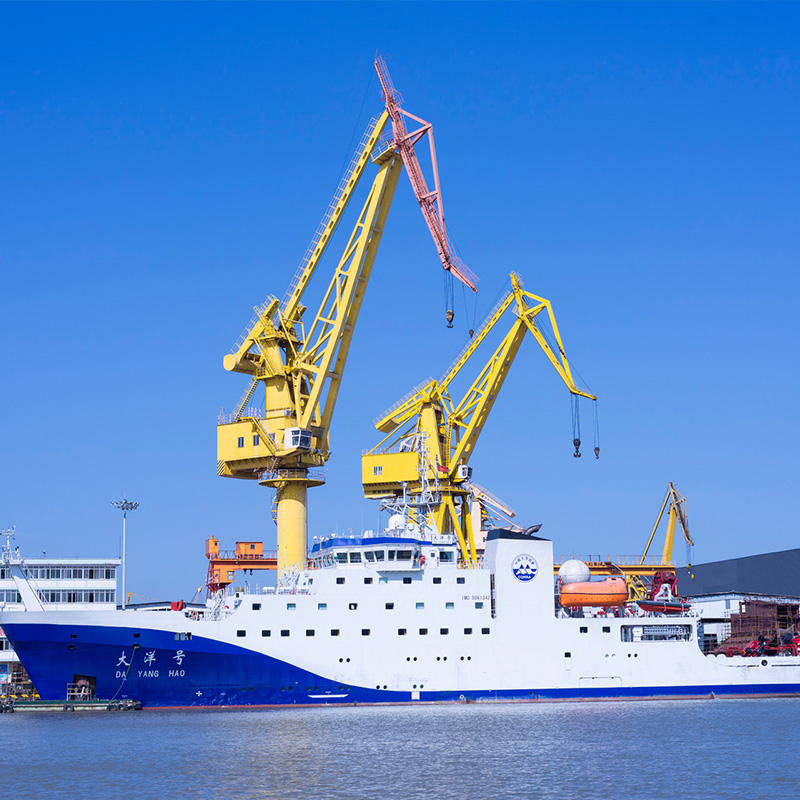
In terms of business model, Seahi charges per cleaning session, with users paying for results. This revenue stream forms the company's revenue floor. Originally planning to establish operations at four ports this year, Seahi has actually completed deployments at seven world-class major ports. Its robots have efficiently maintained over a thousand large vessels and been deployed by clients including China Merchants Shipping and COSCO Bulk Shipping.
This expansion was bolstered by shareholder resources—Seahi's financing brought together diverse stakeholders including government entities, state-owned enterprises, industrial groups, and market-oriented institutions. For instance, Singapore, as an international shipping hub, has substantial demand for vessel cleaning and underwater inspections. It was through the introduction of investor Vertex Ventures that Seahi facilitated exchanges and cooperation with Singapore's ST Engineering.
Can the ship cleaning sector spawn a unicorn? I once discussed this with an investor friend who focuses on tangible assets. While expressing interest, they remained cautious about the market's true scale and potential ceiling.
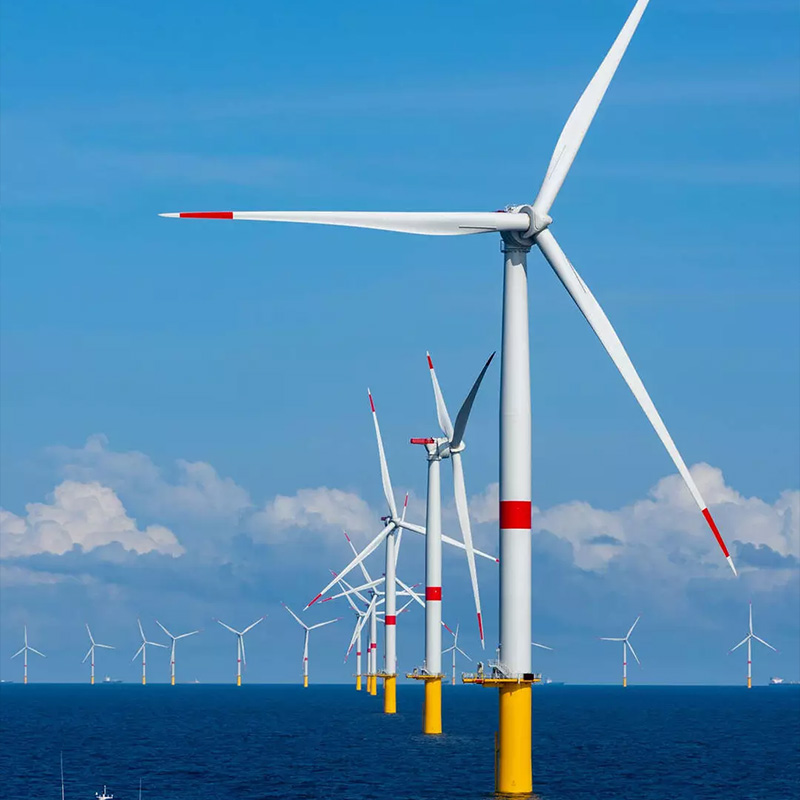
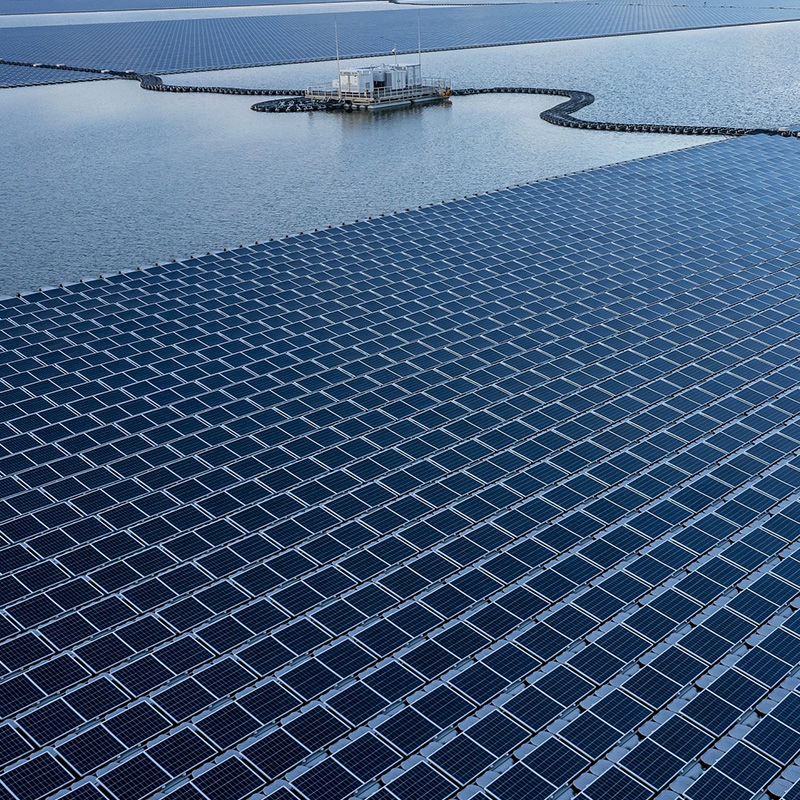
Expanding beyond ship cleaning into new application scenarios has been precisely the focus of this company's efforts over the past six months. Leveraging its universal embodied platform and operational capabilities in extreme underwater environments at depths of up to 10,000 meters, Seahi has seamlessly extended its services into marine photovoltaics, offshore wind power, subsea pipelines, and port pile foundation inspections. Its service network now covers major coastal cities across China while also penetrating international markets in Southeast Asia and the Middle East. Notably, its marine photovoltaic robot has been deployed and won a bid for a China National Nuclear Corporation project, while its offshore wind power robot has been implemented in collaboration with CIMC. Technical preparations and solution validations have also been completed for deep-sea mineral exploration and subsea data center operations.
This year, deep-sea technology, alongside commercial aerospace and low-altitude economy, was included as an emerging industry in the Government Work Report. While deep-sea technology and the marine economy represent vast themes with promising prospects, their underdevelopment in the past stems from specific reasons.
In Chen Xiaobo's view, overseas counterparts position marine robots as “marine engineering equipment,” often featuring boxy or tank-like designs that are inherently single-function tools. The marine environment is complex and variable, with operational scenarios ranging from 0 to 10,000 meters exhibiting vast differences. Traditional approaches suggest that covering all maritime areas and scenarios would require developing tens of thousands, or even hundreds of thousands, of specialized robots—an approach that is neither economical nor efficient in practice.
Seahi's approach to solving problems is to treat marine robots as ‘productive forces’ themselves. By centering on a universal platform and pairing it with different functional modules, the system can adapt to various scenarios, enabling year-round, all-weather operational capabilities. It is precisely this “platform + module” universal design that has allowed the company to expand beyond ship cleaning into marine photovoltaic and wind power sectors within just six months, while continuously pushing the boundaries of marine services.
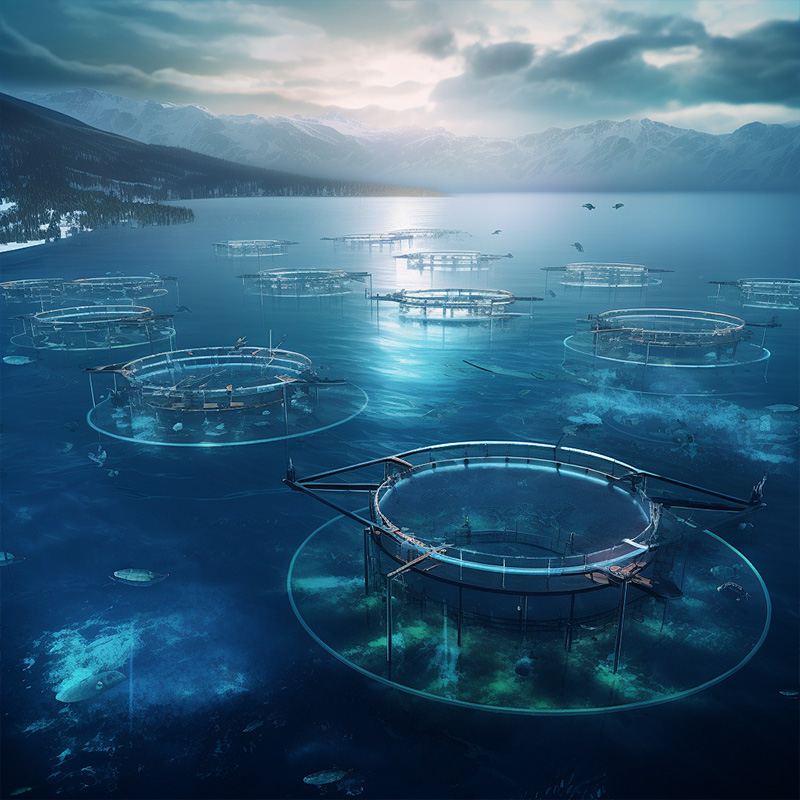
In Xia Zhijin's view, technological accumulation builds barriers that support the expansion into more application scenarios. “Whether in ship cleaning, photovoltaics, aquaculture, or other scenarios, the core technological approaches are similar. The only difference lies in the specific requirements for technical performance metrics.”
03
Finally, let's talk about Chen Xiaobo himself. Just as we wrote The History of Chinese Venture Capital not to compile a “book of achievements,” but to strive, under existing conditions, to reconstruct “the moment” through various accounts, I want to write about an entrepreneur not to extol his success—it's too early to tell—but to trace the trajectory of an entrepreneur.
Chen Xiaobo considers his own journey unremarkable. The public craves dramatic, tumultuous tales, yet his academic path was smooth sailing. Even when he first ventured into entrepreneurship as an unknown, stumbling at every turn, he didn't find it particularly arduous. He can't recall nor articulate those hardships—elements that often make for compelling, easily shared stories.
But in my view, when placed within the category of “scientists turning entrepreneurs,” Chen Xiaobo's profile is far from blurred. He embodies both typical and atypical traits.
His typicality lies in his truly impressive resume. A graduate of the prestigious marine engineering university Harbin Engineering University, he has dedicated 18 years to marine robotics. By age 35, he was promoted to senior engineer, led over 20 major national and provincial projects, secured three consecutive championships at the China Robot Competition, was named a “Young Scientist for a Strong Maritime Nation,” and became the youngest recipient of the First Prize for Progress in National Defense Science and Technology.
However, a formidable chasm has always stood between the ivory tower of scientific research and theory, the front lines of industrial technology implementation, and the cutthroat competition of the commercial market. Chen Xiaobo's atypical journey lies in how effortlessly he seems to have navigated these hurdles.
Reflecting on his personal journey, I attempt to trace some possible—though perhaps not entirely accurate—clues to this atypical path:
His father was among the earliest entrepreneurs after China's reform and opening-up. Starting with a 2,000-yuan bank loan, he ran restaurants, coal plants, weaving factories, and gas stations. His father's hands-on experience navigating market waves likely shaped Chen's market mindset through osmosis.
During his studies, he joined Harbin Engineering University's E-Wei Association—a breeding ground for most entrepreneurs from the institution. Its motto, “Gain competence through practice,” further shaped his approach to action.
As a serial entrepreneur, he gained valuable experience through his first two ventures. For a long time, he spent his days on R&D and his nights at business dinners—ambitious yet adaptable.
Adapting to circumstances and scraping by is one kind of life. Discovering one's talents and calling early on, then advancing along a planned path toward goals, is another. Some revel in the journey, while others pursue achievement—I see no hierarchy between these two paths. Chen Xiaobo clearly belongs to the latter camp, or is at least in that phase now.
As a child, he loved tinkering with electronics—taking apart televisions, cameras, and washing machines—a textbook example of the young scientist archetype found in biographies. Yet he also possessed an atypical side. At four or five years old, he would lie in bed pondering seemingly abstract philosophical questions: “Who am I? Where do I come from? Where am I going?” This was far removed from the stereotypical image of a STEM-focused boy.
During his middle school years, even at a boarding school in Hebei Province with semi-military discipline, he devoured a wide range of books. He read Jin Yong, Gu Long, and Liang Yusheng, and approached economics and political science texts as if they were novels, absorbing numerous economic concepts. This led him to a core insight: the essence of economics is the exchange of value; the key to economic prosperity lies in the speed of exchange; and the fundamental foundation is productivity. The world is propelled forward by productivity. In his view, future society will inevitably evolve into a highly developed state characterized by extreme abundance in productivity, where people no longer need to worry about basic sustenance.
This technological optimism and yearning to reshape the world epitomize the mindset of tech entrepreneurs in our era. Classical economics and Marxist political economy form the roots of his thinking. Tracing further back, echoes of Plato's theory of forms can also be discerned. All concrete things are mere imitations of the ideal, which is why we constantly uncover their flaws—thus, let us transform the world according to the ideal.
In short, the goal of “creating future productive forces” was already set when he chose his path after high school graduation. Evidence of this came when he made the front page of the China Youth Daily's Challenge Cup special edition during the national competition. When asked what he wanted to do in the future, His answer was to start a business in robotics—back in 2009. He even envisioned further: Land covers just over 20% of Earth's surface, yet terrestrial industries are relatively saturated. The oceans, spanning over 70% of the planet, remain a vast blue ocean waiting to be explored. This insight led him to focus on the boundless realm of the seas.
This was the origin of Chen Xiaobo's entrepreneurial journey.
Finally, let's see how investors evaluate Seahi Robotics:
Xia Zhijin, Managing Partner at Vertex Ventures:
Underwater robots offer significant cost-saving and efficiency advantages in hazardous, dirty, and strenuous environments, and are now reaching a critical inflection point for commercialization. With nearly two decades of technological accumulation, the Seahi team leads globally in core technologies such as waterproofing and propulsion. Founder Chen Xiaobo combines professional expertise with corporate management experience, and his steadfast and focused approach earns investor trust. We firmly believe in the team's and company's future prospects.
Wang Gongbin, Founding Partner at Changshi Capital:
Truly exceptional entrepreneurs are mission-driven. Xiaobo has dedicated eighteen years to underwater robotics, combining technical expertise, passion, and business acumen—exactly the kind of entrepreneur we seek. DJI dominates the skies; Seahi will conquer the depths. We stand firmly behind Xiaobo's team!
Zhu Xiaohu, Managing Partner at GSR Ventures:
The complex and demanding marine environment represents one of the most challenging yet valuable scenarios for deploying embodied robots. Seahi stands out as a rare team in the industry, possessing deep technical expertise and engineering experience, coupled with a strong sense of mission and execution capability. Its Orca robot has already demonstrated clear commercial potential in applications such as ship cleaning and marine photovoltaics. We firmly believe Seahi will establish a benchmark for new marine productivity through proprietary technology, unlocking the trillion-dollar blue ocean of the marine economy.
Sun Yuandong, General Manager of Suzhou Venture Capital · Suzhou Fund of Funds:
In this era where maritime power strategies and space exploration advance in tandem, Seahi Intelligent anchors its vision in the deep sea, transforming profound technical expertise into scalable new marine productivity. We maintain unwavering long-term support for Seahi and anticipate the team will continue to build upon deep-sea intelligent equipment as its foundation. This approach not only pioneers the trillion-dollar blue ocean of the marine economy but also leverages technologies and engineering systems forged in Earth's “final frontier” to contribute solid strength to China's journey toward broader celestial horizons.
Liu Jiantao, Co-founder of Jinglue Ventures:
Seahi has strategically aligned with national priorities and focused on critical industry needs. Leveraging nearly two decades of deep technological expertise and engineering capabilities, the company has rapidly achieved commercialization in the underdeveloped field of deep-sea robotics. By addressing industry pain points such as cost, efficiency, and labor replacement, Seahi has emerged as a leading enterprise in the sector. We firmly believe that under Dr. Chen's leadership, Seahi Intelligent will continue to deepen its exploration of the blue frontier, continuously build technological moats, and contribute distinctive Seahi solutions to China's strategy of becoming a maritime power.